
Crawford County Criminal History Checks
Crawford County has no one search that joins every police report, booking entry, court filing, warrant, and state repository item. Begin with the Unified Judicial System of Pennsylvania Web Portal when the goal is a filed criminal case. Select Crawford County in the Common Pleas or Magisterial District Judge search, then compare the participant name, date of birth when shown, filing date, docket number, and offense. A name alone is not a safe match.
Use a layered check so each official source answers the part it actually holds. The county Clerk of Courts can supply non-electronic or certified Common Pleas papers. A city or borough police department holds its own incident report. Crawford County Correctional Facility and VINELink deal with custody. PATCH provides a Pennsylvania repository result, not a nationwide search or a full copy of the court file.
- Search UJS Common Pleas and MDJ dockets, then note the docket number and offense tracking number, or OTN.
- Open the matching docket and review each charge, event, disposition, and sentence separately.
- Ask the arresting agency for releasable incident material and the jail for current custody facts.
- Contact the Clerk of Courts when the online sheet is missing a document or a certified copy is needed.
- Use PATCH for the PSP repository product, or Access and Review for your own full Pennsylvania file.
Crawford County's Two Records Buildings
The phrase “county courthouse” can send a reader to the wrong desk. The historic Crawford County Courthouse stands at 903 Diamond Park in Meadville and houses the Public Defender in Suite B1. Most working criminal-record offices are nearby at the Crawford County Judicial Center, 359 E. Center Street. The second floor holds the Clerk of Courts and Sheriff, while the District Attorney is on the first or lower level. Adult Probation and Parole and Common Pleas functions also operate there.
County offices generally publish weekday hours of 8:30 a.m. to 4:30 p.m. Call the destination before travel because current parking, device, accessibility, and courtroom details were not found in one official notice. Sheriff personnel screen bags and belongings at the Judicial Center. For records, the key point is custody: the Clerk maintains the criminal case file, the Sheriff keeps its own records, and the Public Defender does not act as a public record counter.
Clerk of Courts
Judicial Center, second floor
359 E. Center Street, Meadville
814-333-7442
Crawford County Sheriff
Judicial Center, second floor
359 E. Center Street, Meadville
814-333-7411
Correctional Facility
2100 Independence Drive
Saegertown, PA 16433
Use the official facility page for its current line.
Official Background Checks in Pennsylvania
The Pennsylvania State Police Central Repository runs Pennsylvania Access To Criminal History, known as PATCH. An unregistered public user may submit a name-based request for $22. A notarized result costs $27, and a qualifying volunteer request is free. The form uses the subject's name, birth date, sex, race, Social Security number when voluntarily supplied, and request details. A result may show “No Record,” “Record,” or “Request Under Review.” Review status is not proof of a record.
The official PATCH interface shows why a repository check is a separate step from a Crawford County docket search.
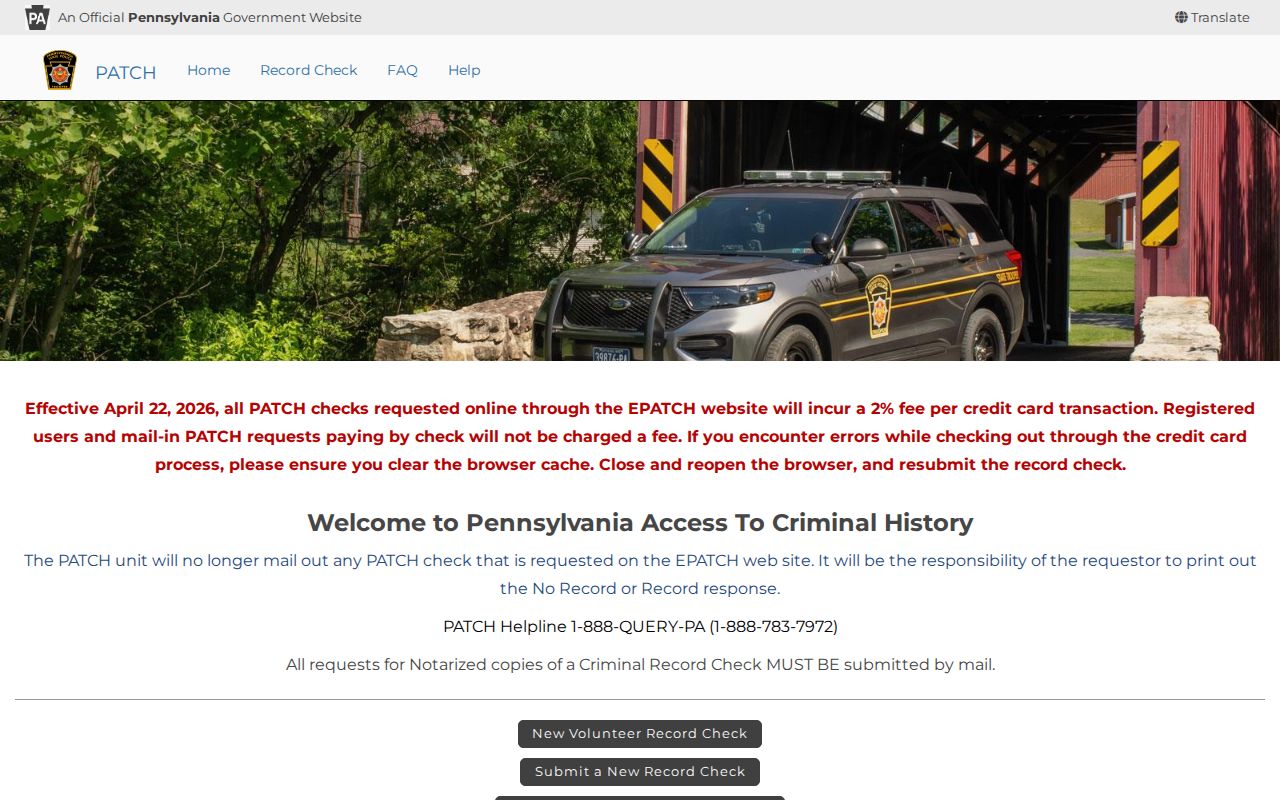
PATCH compares submitted identity data with Pennsylvania law-enforcement records reported to PSP. It does not search the FBI or every state.
A person who wants the full Pennsylvania file about themselves, including non-conviction data, uses mail-only Access and Review form SP 4-170 and pays $20. Authorized FBI fingerprint checks run through IDEMIA/IdentoGO. Pre-registration is required, and the service code and cost depend on the law that authorizes the check. The Pennsylvania fingerprint location finder illustrates that program-specific route.
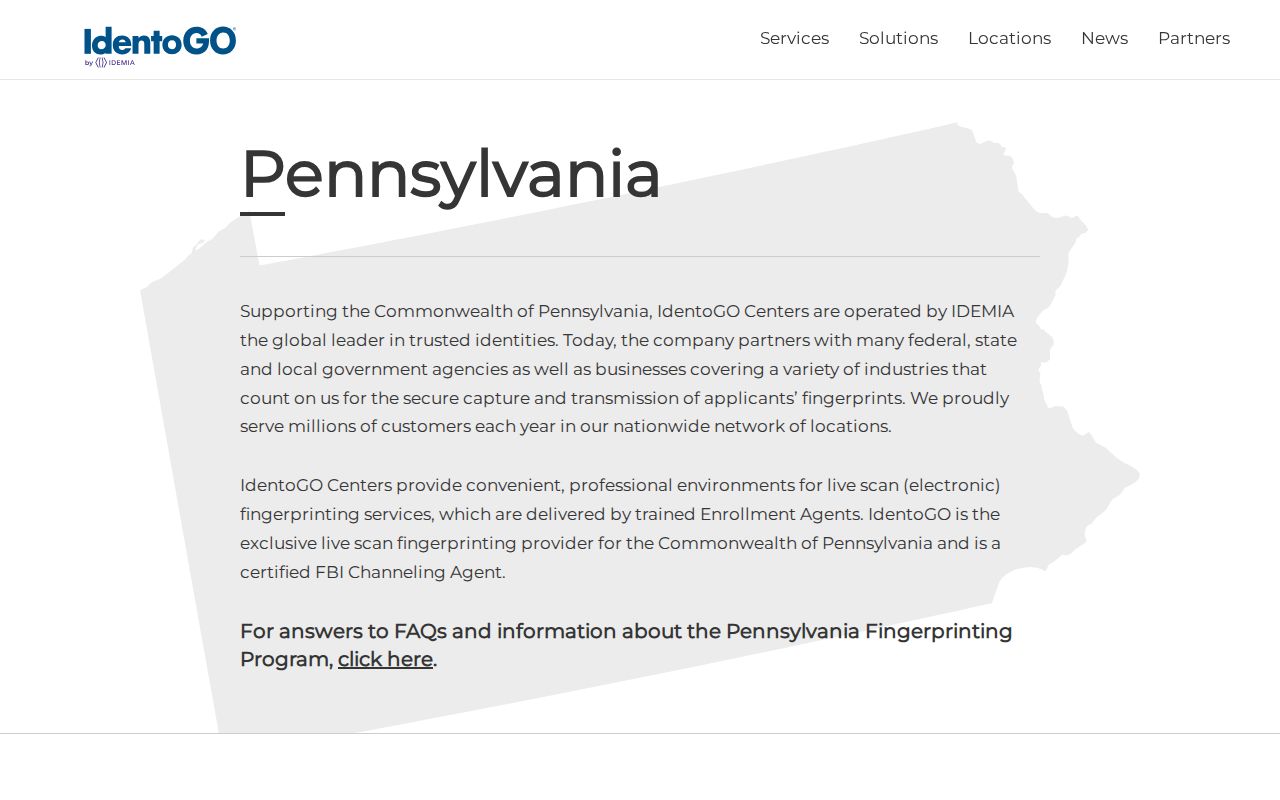
Choose a service code through the requesting Pennsylvania program rather than guessing at the enrollment screen.
What Crawford PATCH Results Search
A $22 PATCH check and a free UJS docket search should not be expected to match line for line. PATCH is a repository product built from law-enforcement and court reporting. UJS is a public court information system with filings, hearing events, counsel, dispositions, sentences, and financial entries. Recent reporting delays, identity mismatches, later restrictions, or a case that never produced a reportable conviction can create a different view.
The PSP criminal history product page describes each request type and its fee.
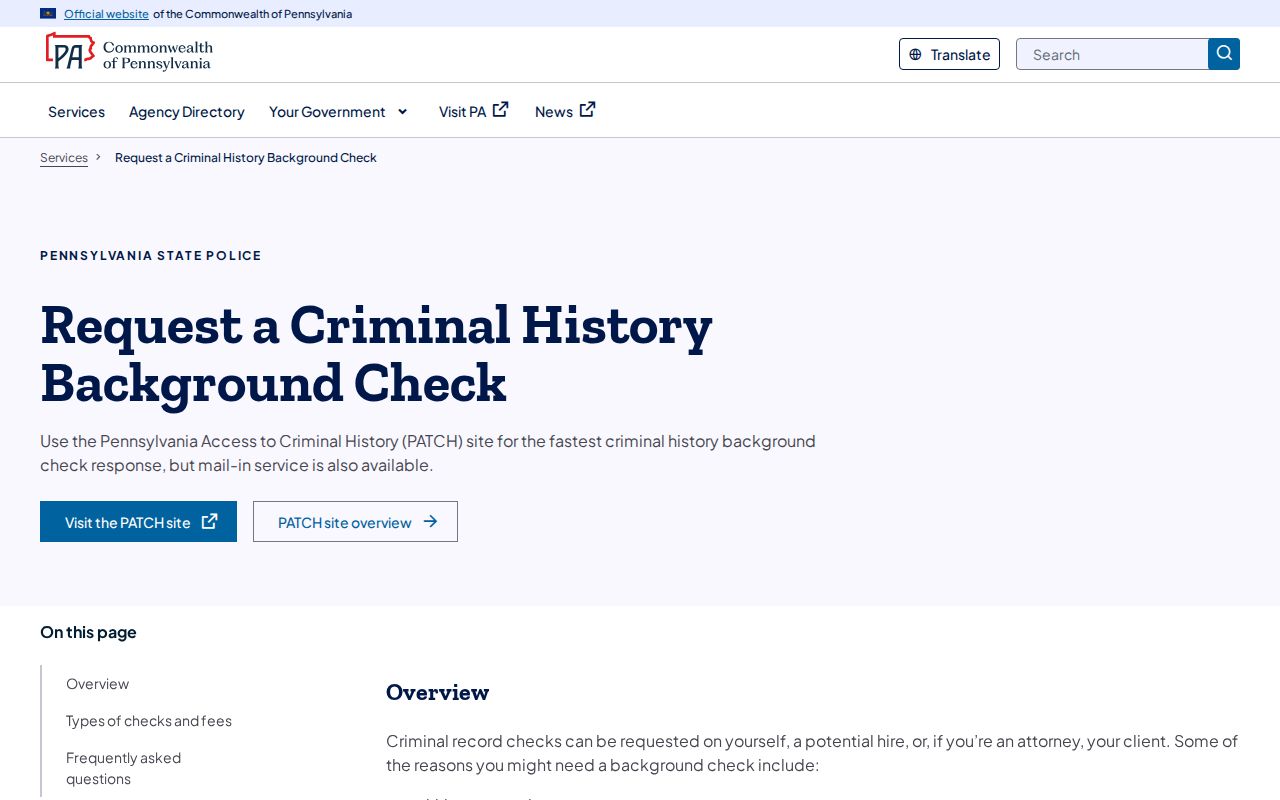
For self-review, save the control number and compare the result with Crawford County docket numbers before asking an agency to correct a mismatch.
| Channel | Best use | Main limit |
|---|---|---|
| UJS Portal | Filed Crawford County cases and events | Not a statewide rap sheet |
| PATCH | PSP public repository result | Not an FBI or nationwide result |
| Access and Review | Your full Pennsylvania repository file | Subject-only, mail process |
| Clerk of Courts | Case papers and certified copies | Common Pleas file, not police narrative |
Kinds of Crawford County Criminal Records
The creator controls the record. Police incident and arrest reports describe the first investigation. Crawford County Correctional Facility creates booking and custody material after a commitment. MDJ and Common Pleas offices create dockets as charges move through court. PSP links reportable arrest and disposition data in its Central Repository. Probation and parole offices keep supervision files, while PSP maintains the Megan's Law public registry.
- Incident and arrest reports: request them from the police agency that investigated.
- Bookings and custody: check the county facility list or VINELink for current status.
- Court case files: use UJS and the Crawford County Clerk of Courts.
- Repository history: choose PATCH or subject-only Access and Review.
- Warrants and supervision: verify with the issuing court, Sheriff, or supervising office.
The split is useful. It lets a reader test one record against another, but it also means that an empty search in one system never proves that no other record exists.
Crawford's Form Has Firm Limits
The Crawford County open-records form asks for requester contact details, a clear record description, and delivery information. It also warns people seeking police reports or non-financial court information that another custodian may control the material. The county Open Records Officer handles county administrative records. That office is not a substitute for the Clerk, a municipal police records officer, or PSP.
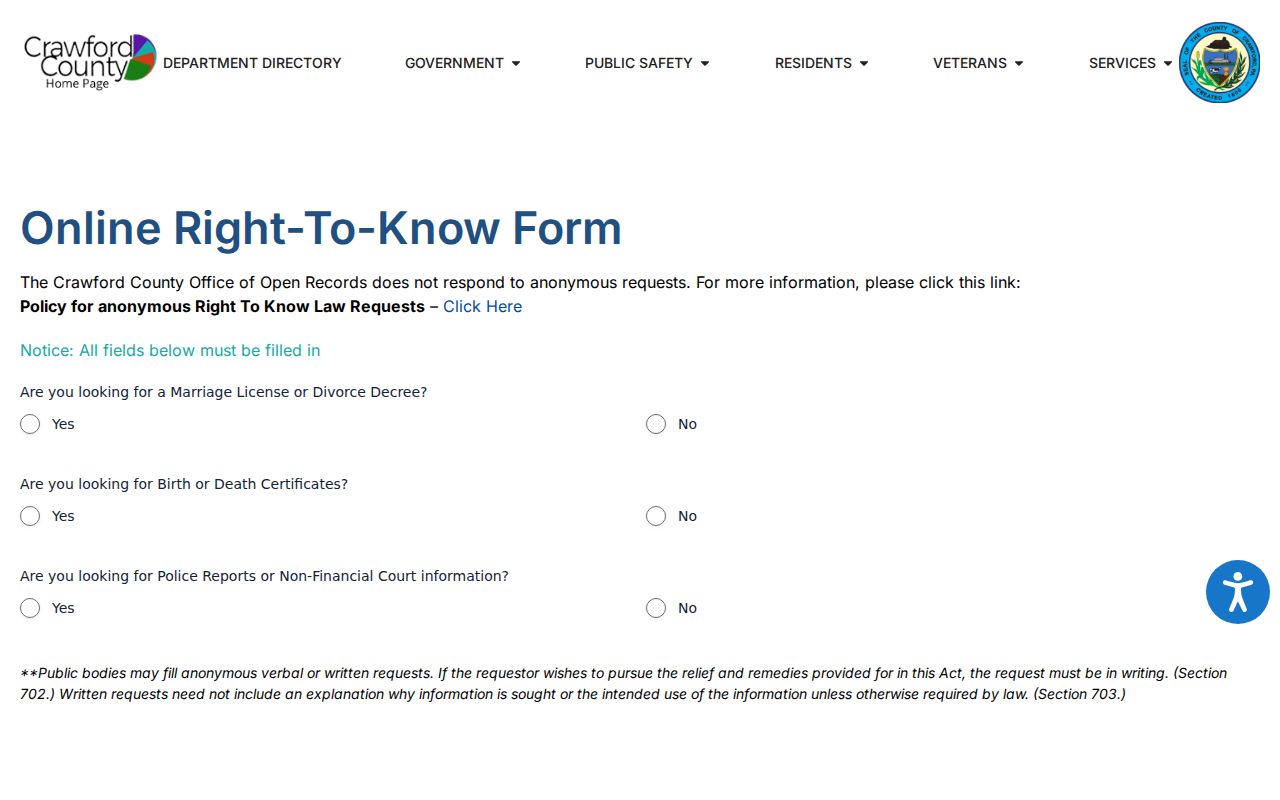
A focused request should name the agency, record type, date range, known incident or case number, desired format, and request for any segregable public part.
Under the Pennsylvania Right-to-Know Law, an agency normally has five business days to grant, deny with reasons, or invoke more time. Court records follow UJS access policy instead. Police investigative reports are often exempt, and police audio or video uses Act 22. No current county criminal-record copy schedule was located, so confirm charges with the office instead of assuming the general fee rules apply to certified court papers.
Crawford County Records: What They Contain
A docket or repository entry is a set of fields, not a verdict in shorthand. Confirm the subject, court, and case before reading the outcome. Crawford County UJS sheets can display a participant name, date of birth, docket number, OTN, filing date, grade, statute, charge text, bail, scheduled events, counsel, dispositions by count, sentence details, and costs. Some identifiers are masked from the public view.
| Name and identifiers | Participant name, date of birth when public, docket number, and OTN help distinguish records. |
|---|---|
| Arrest and booking data | Agency, incident date, booking date, custody status, and jail identifiers may sit in separate systems. |
| Charges and statutes | Each count has a grade, statute citation, text, and later status. |
| Disposition | Each count may be guilty, dismissed, withdrawn, acquitted, or resolved another way. |
| Sentence | Confinement, probation, fines, costs, and conditions appear after disposition when ordered. |
| Custody or supervision | Jail, DOC, county probation, and state parole sources answer different status questions. |
An OTN is the offense tracking number that helps connect a fingerprintable arrest cycle to court and PSP reporting. It is not the police incident number or the court docket number. Keeping all three prevents confusion when asking the correct office for a record.
Crawford Jail Records Then and Now
Crawford County's first court met in a private home in 1800. By 1805, a square log building combined the upstairs courtroom, rear jail rooms, jailer's residence, and a timber stockade. The present courthouse followed in the nineteenth century. Today the record custodians are deliberately split: court offices sit near Diamond Park, while Crawford County Correctional Facility operates at 2100 Independence Drive in Saegertown.
The modern jail's public PDF is spare. It lists a name, booking date, and sentence-end date. It omits the rich arrest narrative, charge history, bond terms, and full booking fields that a reader may expect. The facility's 2024 procurement material reported an average daily population of 164 and an average stay of 45 days. Those figures describe facility operations, not a crime rate.
Pennsylvania Public Access Laws
Several rules govern a Crawford County record, and the office holding it matters as much as the label. The Right-to-Know Law starts with access to many agency records but contains exemptions. CHRIA governs criminal history dissemination and correction. UJS policy controls public court case records. Act 22 creates a special request and appeal path for police audio and video.
Key laws and rules:
Pennsylvania Right-to-Know Law explains local agency requests, response times, exemptions, and appeals.
18 Pa.C.S. § 9121 and related CHRIA sections govern collection, release, review, correction, expungement, and limited access.
UJS public record policies govern access and confidentiality for Pennsylvania court files.
Act 22 police recording process separates law-enforcement audio and video requests from ordinary RTKL practice.
Juvenile, victim, medical, personal-security, sealed, and investigative material can be withheld or redacted. A public docket does not mean every document behind it can be downloaded.
Crawford County Warrant Fallback Chain
No official countywide public warrant list was located. Pennsylvania law enforcement uses warrant systems that are not open public databases. A person concerned about their own warrant should not infer safety from an empty web search. Start with the court that may have issued it. Search UJS for the case and contact the assigned MDJ or Crawford County Clerk of Courts. The Sheriff's office can address its own warrant process at 814-333-7411.
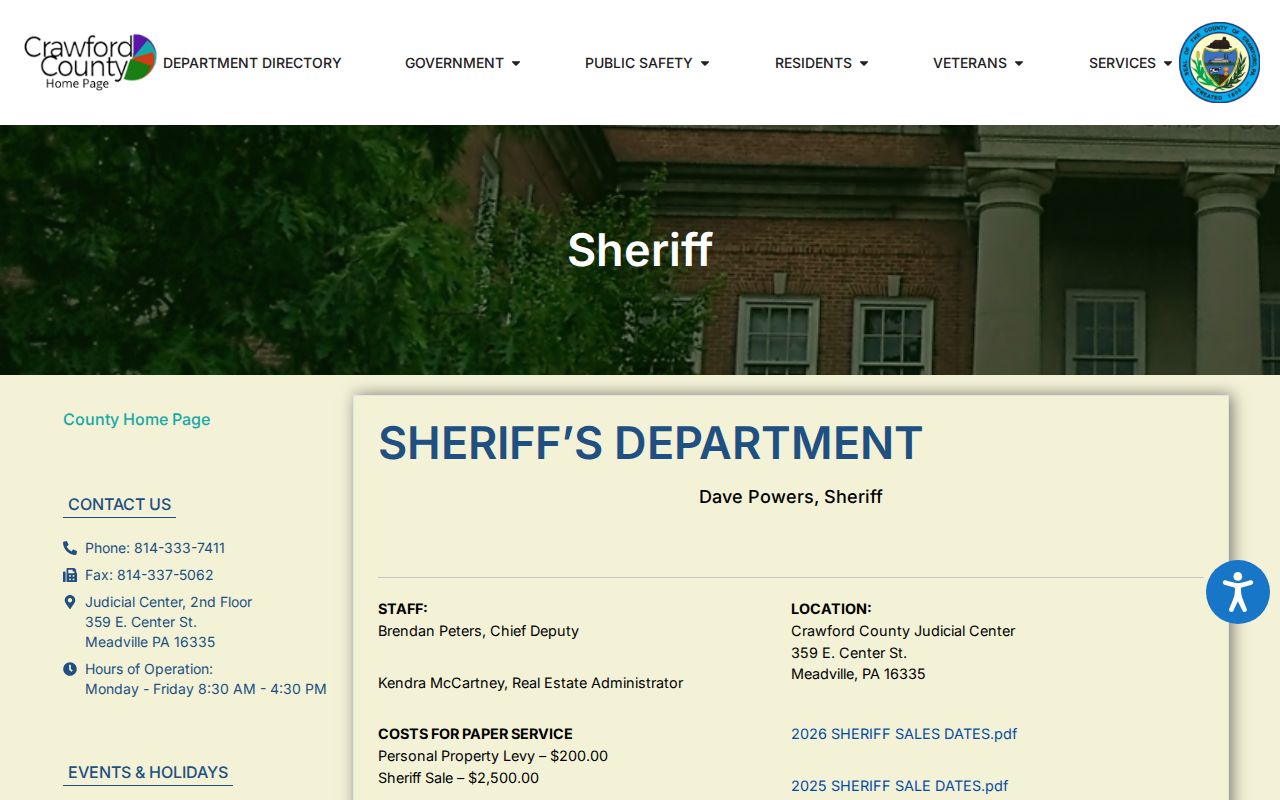
The Crawford County Sheriff page identifies the official Judicial Center office.
For a PSP matter, contact the relevant station. A bench warrant comes from the court, so the case docket and court office remain essential even when the Sheriff may execute it. Do not appear at an office solely on the strength of general web advice; call for instructions and seek counsel when needed.
Restricted, Sealed and Expunged Records
Dismissal does not by itself erase a Crawford County docket or PSP arrest cycle. Pennsylvania expungement under 18 Pa.C.S. § 9122 can destroy qualifying records after a court order. Petition-based limited access under § 9122.1 and clean slate limited access under § 9122.2 generally hide eligible material from public dissemination rather than destroy it. Some agencies retain lawful access.
The Crawford County Clerk of Courts publishes Common Pleas and magisterial expungement forms. A filing fee was not located in the current official research, so confirm it with the Clerk. After an order, processing must reach the clerk, prosecutor, arresting agency, and PSP Central Repository. Check both UJS and your PSP record after enough processing time. If an entry remains, use the UJS error-correction form for a court clerical problem or the PSP challenge process for repository data.
Note: Limited access changes public visibility, but it is not the same act as destroying a record through expungement.
Crawford Custody and Supervision Locators
Choose the locator by who holds or supervises the person. Crawford County Correctional Facility covers county custody. VINELink adds custody searching and notifications. The Pennsylvania DOC Inmate/Department Supervised Individual Locator covers state incarceration and supervision records. Crawford County Adult Probation and Parole handles county-sentence supervision; the Pennsylvania Parole Board decides state parole matters and DOC oversees field supervision.
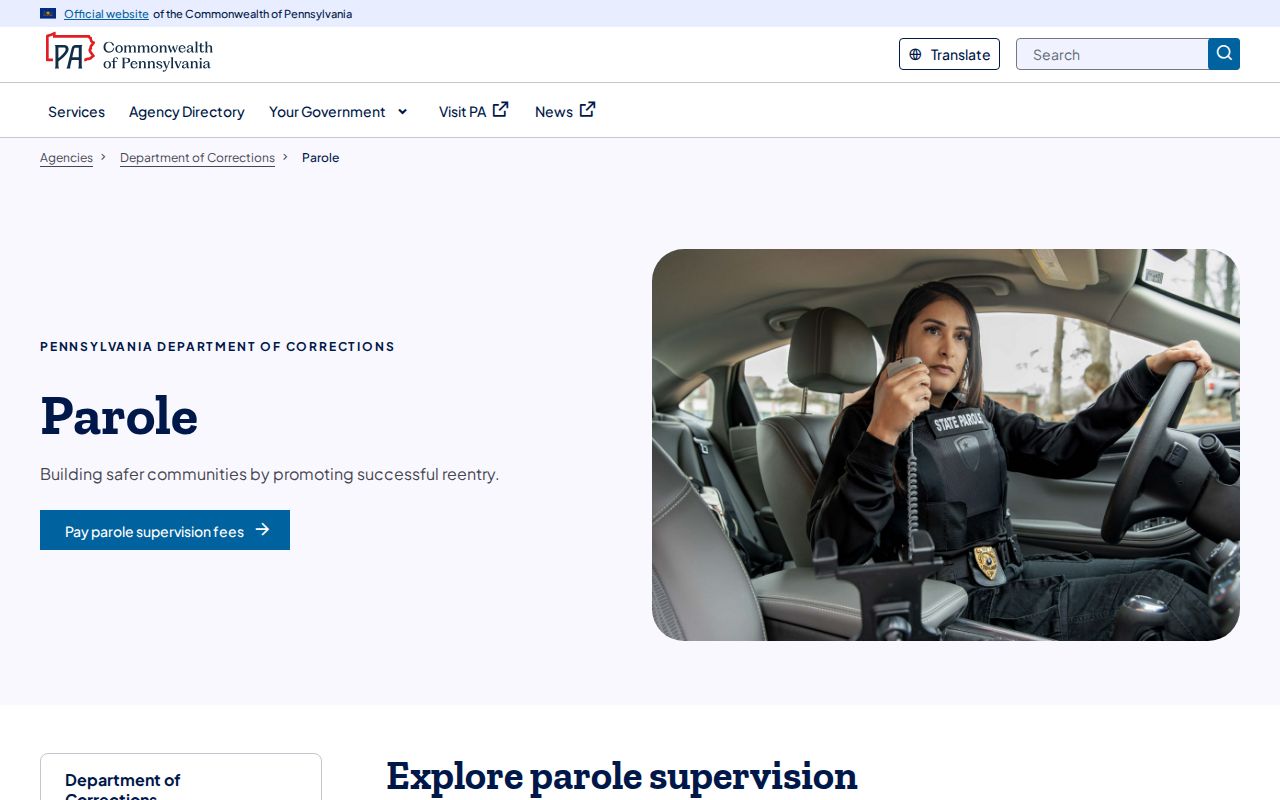
The official Pennsylvania parole resource distinguishes state parole functions from Crawford County probation.
A parole page cannot confirm a recent county booking, and the jail PDF cannot show a full arrest history. Use VINELink alerts for custody events and UJS calendars for court events.
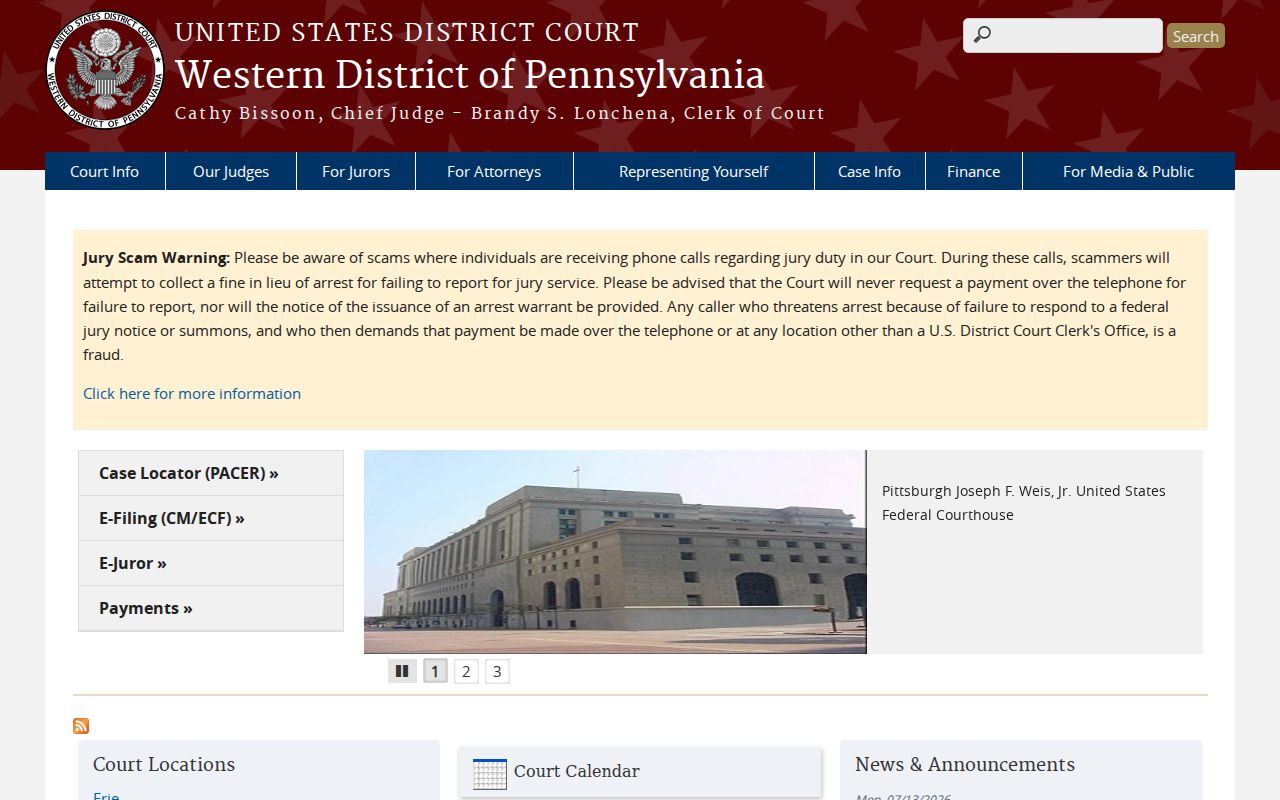
The federal layer is separate again. Crawford County sits in the Western District of Pennsylvania. The U.S. District Court for the Western District of Pennsylvania provides court information, while PACER supplies federal dockets and the Bureau of Prisons has its own locator.
Federal filings do not belong in the county Clerk's Common Pleas file, even when the event occurred in Crawford County.
Crawford County's Charge Pipeline
A criminal complaint normally begins before a Magisterial District Judge. The MDJ handles preliminary work and summary matters. A misdemeanor or felony held for court moves to the Court of Common Pleas, where the District Attorney files a criminal information. The Clerk of Courts maintains that file through arraignment, motions, plea or trial, disposition, and sentence. This is why an arrest charge may differ from the count ultimately filed or resolved.
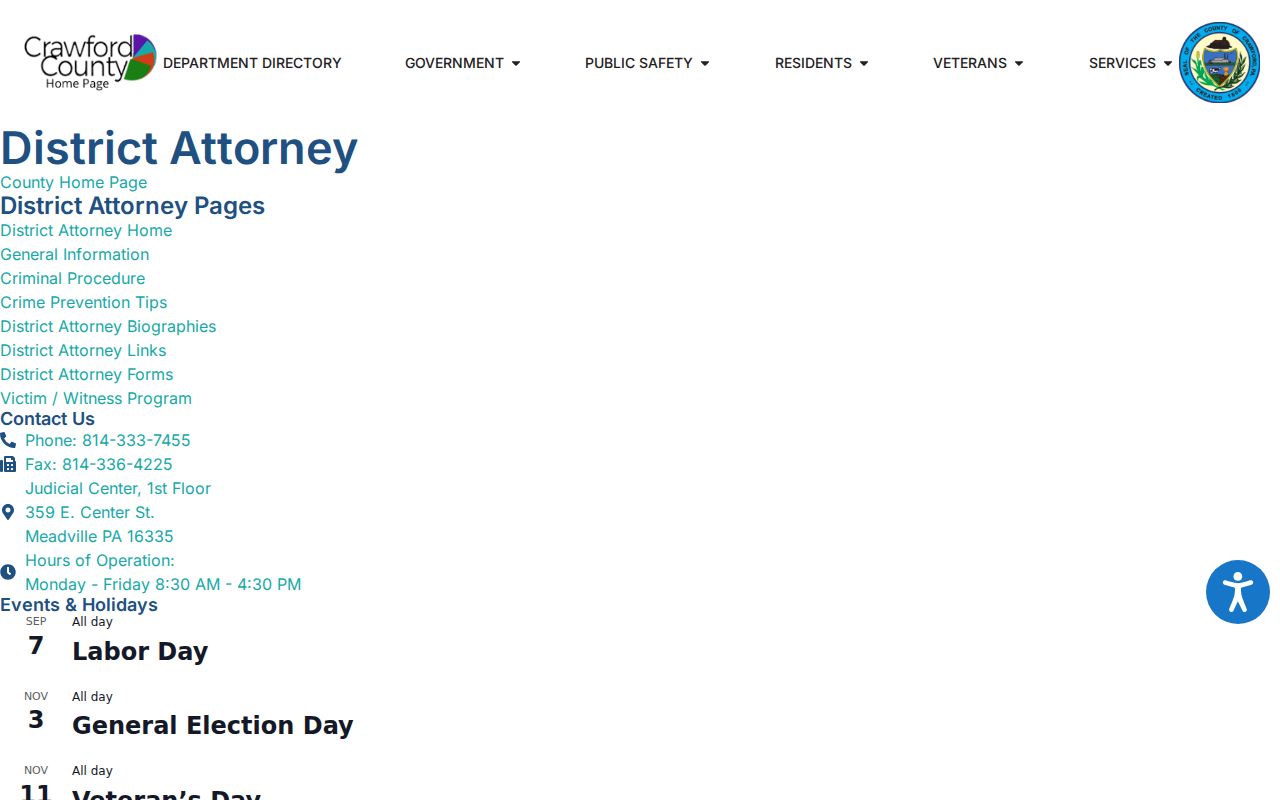
The Crawford County District Attorney's official page describes the local prosecution office at the Judicial Center.
Victim and witness services also run through that office. A person seeking defense representation instead contacts the Public Defender, whose signed application, income proof when applicable, and intake interview serve a different role from record access.
Record flow: Police complaint › MDJ review › Common Pleas filing › disposition › PSP update.
City-by-City Crawford County Records
Local police agencies create their own incident reports, while criminal cases move through Pennsylvania MDJs and Crawford County Common Pleas rather than a separate city court system. The three largest incorporated places in the 2020 Census are Meadville, Titusville, and Cambridge Springs. Each record check starts with its local department, then branches to the county jail, UJS, Clerk, or PATCH as the question changes.
Meadville Record Check
Population 13,050. Start at Meadville Police for incident material and UJS for filed cases.
Titusville Record Check
Population 5,262. Titusville has a police counter and short-term lockup, not a separate county jail.
Cambridge Springs Record Check
Population 2,592. The borough police and government share Carringer Street.
Cambridge Springs is legally a borough, but it ranks third among the county's incorporated places and therefore belongs in this city-guide set.
Crawford Record Help by Office
The correct office depends on the desired act. Clerk Patricia “Patti” Wetherbee's office handles Common Pleas criminal records, forms, payments, and certified papers. Sheriff Dave Powers's office handles Sheriff-created records and warrant functions. District Attorney Paula DiGiacomo's office prosecutes cases and serves victims and witnesses. Public Defender J. Wesley Rowden's office considers qualifying defense applications.
The Crawford County Public Defender page explains eligibility and intake at 903 Diamond Park, Suite B1.
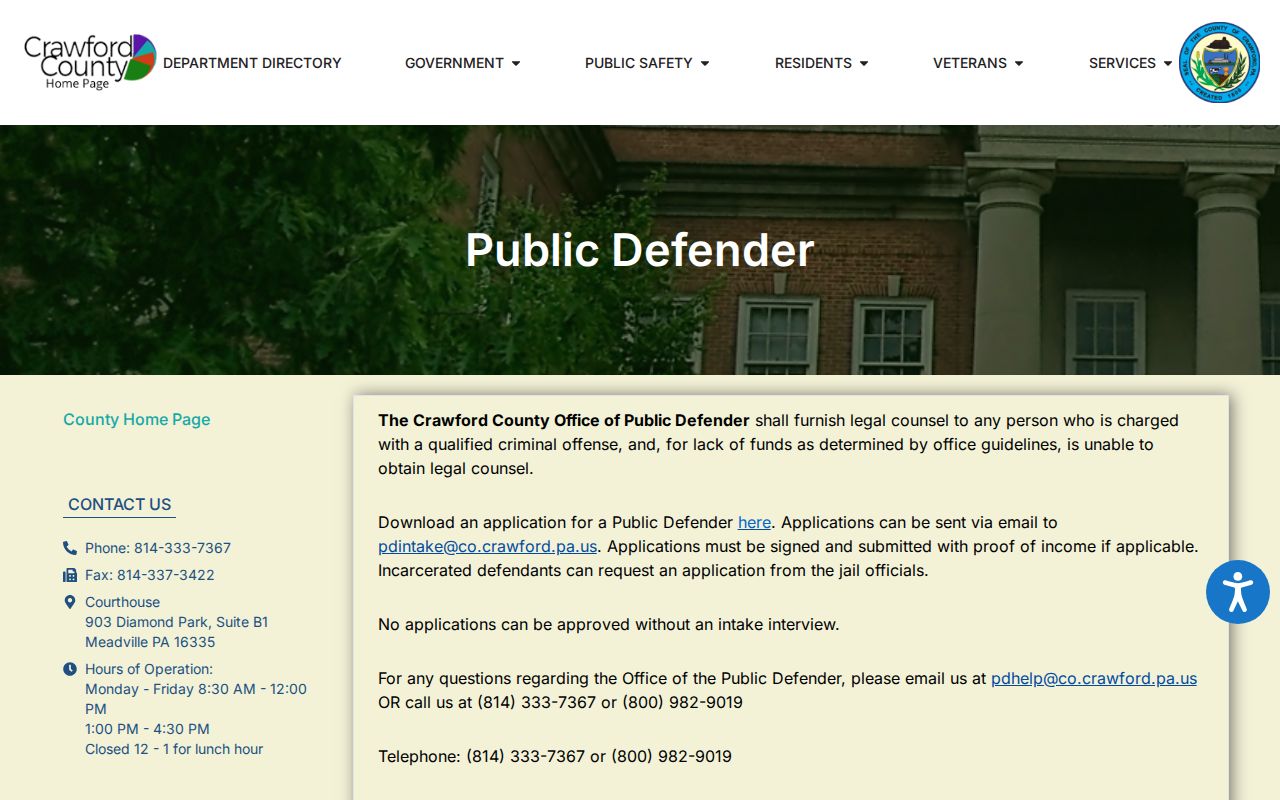
Call 814-333-7367 or 800-982-9019 for that office. Incarcerated applicants request a form from the jail. None of these services replaces a PATCH record review or a UJS docket search.